There’s something quietly addictive about carousels on social media. You tap once, then again, and before you know it you’ve swiped five slides, maybe ten — even when the first image was just a simple title card. This isn’t accidental. Modern carousels tap into basic psychological mechanisms that make them more engaging than single images or videos, and that’s exactly why they’ve become a dominant storytelling format in feeds around the world.
At the heart of carousel engagement is curiosity. A good carousel doesn’t show you everything at once. It opens a question, a mini-challenge: What happens next? That “open loop” triggers a cognitive tension similar to the ones we experience with puzzles or riddles. Our brains have a natural need to resolve incomplete information, a phenomenon related to what psychologists call the Zeigarnik effect — we remember unfinished tasks better than completed ones, and we feel compelled to finish them. Carousels exploit that instinct. Once you see the first slide, you instinctively swipe to close the loop and find an answer, resolution, or payoff on the last slide.
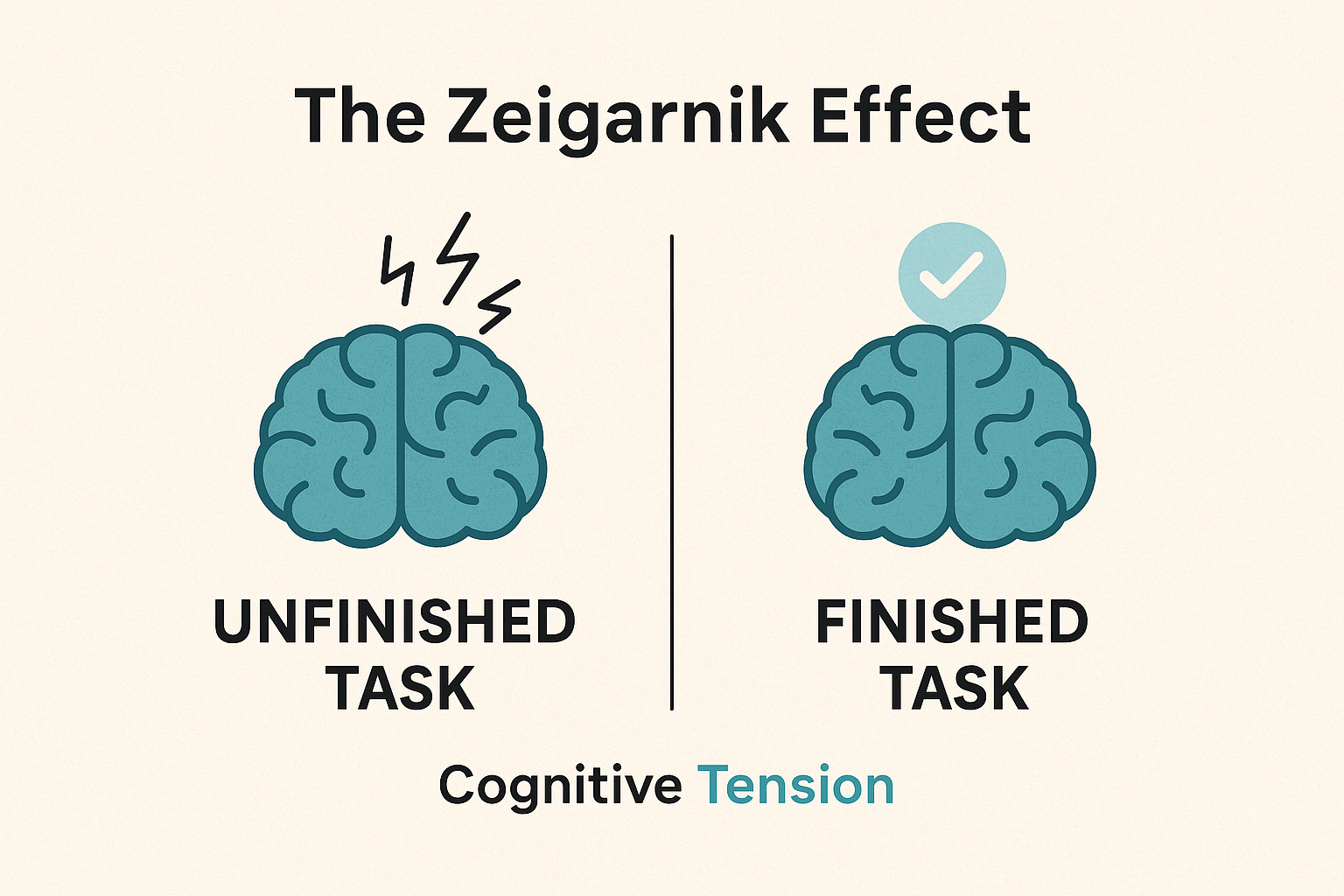
The Zeigarnik Effect explains why unfinished sequences create mental tension — and why carousels keep us swiping until the story feels complete
This mechanism creates micro-rewards with every swipe. Each time you move to a new slide, your brain gets a small hit of satisfaction — a tiny dopamine release that comes from progressing through information. It’s the same psychological architecture that makes people refresh timelines or click “next chapter” on streaming platforms. Because each carousel is literally a sequence of steps toward a conclusion, it feels like small wins accumulating — and our minds love that sensation.
Importantly, carousels also increase interaction by design. Unlike a static image that registers one view or one like, carousels register multiple micro-interactions: each swipe counts as engagement in both user psychology and platform algorithms. Social media systems interpret prolonged engagement — measured by the number of slides a user explores — as a signal of high interest and relevance, and they reward it with wider distribution. Platforms like Instagram use this completion rate metric even more aggressively than likes or comments because it reflects intentional interaction rather than passive scrolling.
That’s why carousels don’t just feel “fun” to swipe — they feel participatory. Passive scrolling puts users into a trance of autopilot consumption; carousels interrupt that trance by requiring a decision at each slide. This shift from passive viewing to active participation creates much stronger cognitive involvement, forging a deeper connection between the viewer and the content. And in branding terms, involvement is loyalty.
Beyond psychology, carousels also tap into structural storytelling advantages. They allow complex narratives to be broken into digestible snippets. A carousel can introduce a premise, develop ideas, reveal surprises, and conclude with a call to action — all within a single post. That micro-storytelling mirrors how our brains process narratives: in chunks rather than monolithic blocks of information. This makes the format ideal not just for entertainment, but for education, persuasion, and memory retention.
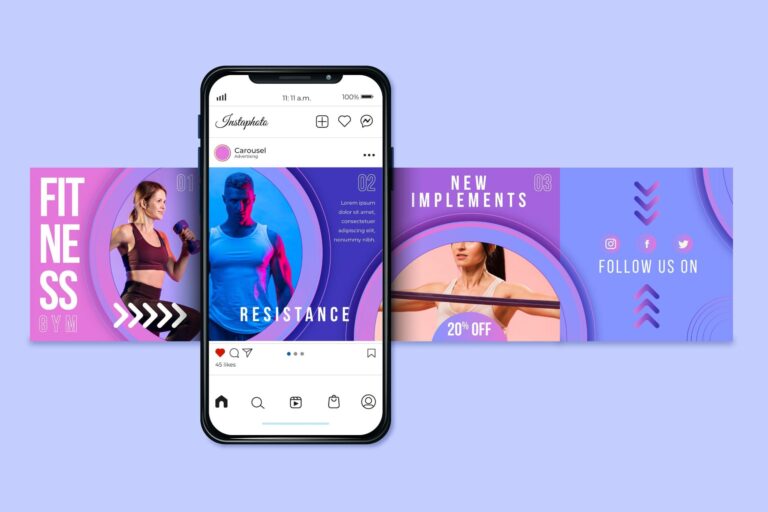
An example of an Instagram carousel post, showing how swipeable slides combine visuals, messaging, and calls to action into a single, engaging storytelling format
Of course, not all carousels are created equal. When used strategically, they can elevate content in a way that static images and single videos cannot. But when they’re overused or poorly executed, their psychological hooks can work against creators, leading to swipe fatigue or disengagement. The key lies in balancing curiosity with payoff — giving audiences a reason to start swiping and a meaningful reward when they reach the end.
In the end, the success of carousels isn’t just algorithmic. It’s psychological. By aligning with innate human instincts — curiosity, completion bias, micro-rewards, and narrative processing — carousels turn simple interaction into sustained engagement. That’s why, in an age of infinite scroll and diminishing attention spans, carousels feel less like a format and more like a behavioral design engineered for the way our brains actually work.

Comments (0)